Test-Wiseness Skills among Female Students at the Abu-Isa Faculty of Education
Abstract
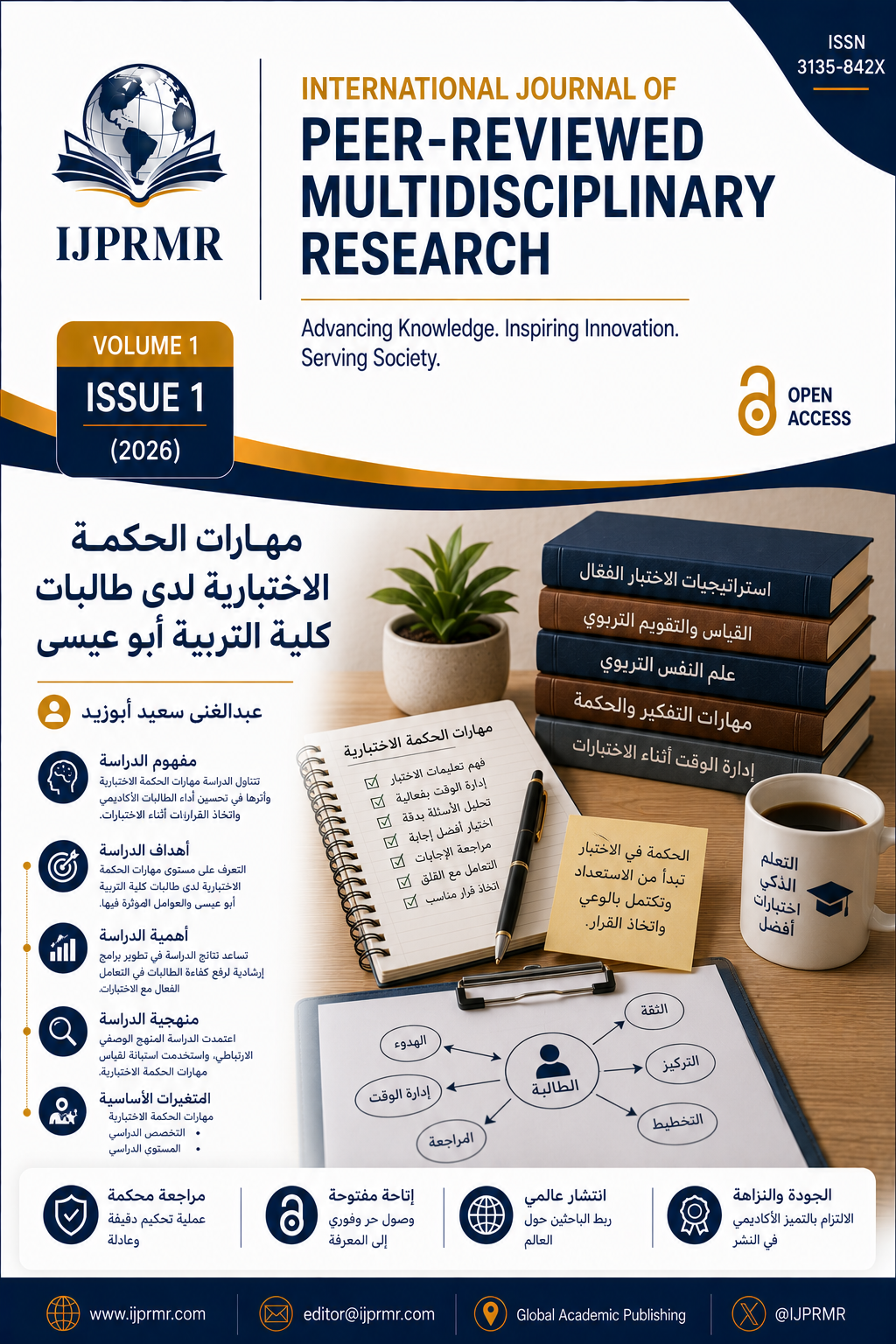
This study examines test-wiseness skills among female students at the Faculty of Education, Abu Issa. Test-wiseness is considered an important factor influencing students’ performance in achievement tests, particularly multiplechoice examinations. The study aims to highlight the concept of test-wiseness and its role in improving students’ test performance, as it represents a set of cognitive abilities and strategies that help students deal effectively with test items, even when they do not have full knowledge of the content.
The literature review indicates that test-wiseness contributes to explaining variations in students’ test scores, as some students achieve higher scores due to their possession of these skills, even when their academic preparation is weaker. Conversely, a lack of test-wiseness skills may lead to negative outcomes such as increased test anxiety, reduced motivation, and lower academic achievement.
The study emphasizes the importance of training students in test-wiseness strategies, such as carefully reading instructions, managing time effectively, and understanding question requirements. However, it also stresses that these skills are not a substitute for proper preparation and continuous studying. The study concludes that educational institutions should pay greater attention to developing test-wiseness skills among students in order to enhance academic performance and ensure more accurate and fair assessment of achievement.
Keywords
Test-Wiseness, Achievement Tests, Multiple-Choice Questions, Test Anxiety, Academic Performance
References
- المراجع:
- -1 أبو هاشم، السيد محمد )2008(. النموذج البنائي التنبؤي لمهارات الدراسة والحكمة الاختبارية والتحصيل الدراسي لدى طالب المرحلة الثانوية، مجلة كلية التربية، جامعة المنصورة، المجلد )1(، العدد )68(، 210-270.
- -2 أبو هاشم، السيد محمد )2015(. أساليب التفكير في ضوء نظرية ستيرنبرج: دراسة مقارنة بين عينتين مصرية وسعودية من طلاب الجامعة. رسالة التربية وعلم النفس، 48-77، 102.
- -3 عبادة، أحمد عبد اللطيف. )2001(. المذاكرة الصحيحة طريق إلى التفوق. القاهرة: مركز الكتاب للنشر والتوزيع.
- -4 عودة، أحمد سليمان، 2005. القياس والتقويم في العملية التدريسية، ط2، دار الأمل للنشر والطباعة، الأردن.
- -5 زهران، محمد حامد )2000(. الإرشاد النفسي المصغر للتعامل مع المشكلات الدراسية. القاهرة: عالم الكتب.
- -6 ردادي، زين بن حسن )2001(. الحكمة الاختبارية وعلاقتها بنوم الطالب وتخصصه وتحصيله الدراسي، مجلة كلية التربية، جامعة الزقازيق، العدد )39(.
- -7 دودين، حمزة )2005(. تدريب استراتيجيات تقديم الاختبارات، اللجنة الوطنية القطرية للتربية والثقافة والعلوم، مجلة التربية، مارس، العدد 102، 117-152.
- -8 دودين، حمزة، 2005(: تدريب استراتيجيات تقديم الاختبارات، اللجنة الوطنية القطرية للتربية والعلوم، مجلة التربية )العدد 10، 2005(.
- -9 النصار، صالح، المراكز الأكاديمية في الجامعات العربية ودورها في تنمية مهارات الطلاب الدراسية، ورقة عمل مقدمة إلى مؤتمر رم الشيخ )17-21 أبريل(.
- -10 سليمان، ماهر خالد 2013. حكمة الاختبار لدى طلاب جامعة تبوك في ضوء متغيرات التخصص والمعدل التراكمي والمستوى الدراسي، مجلة العلوم التربوية والنفسية، كلية التربية والآداب، جامعة تبوك.
- -11 سليمان، ماهر خالد: 2013. حكمة الاختبار لدى طلاب جامعة تبوك في ضوء متغيرات التخصص والمعدل التراكمي والمستوى الدراسي، مجلة العلوم التربوية والنفسية، كلية التربية والآداب، جامعة تبوك.
- -12 طارق عبد العالي السلمي، التفكير الإيجابي والحكمة الاختبارية لدى طلبة المرحلة المتوسطة من الموهوبين والاعتياديين في مدينة جدة، مجلة العلوم التربوية والنفسية، البحرين )19( )1(، 2018.
- -13 عزة، أحمد محمد حسين، 2010. أثر تنمية الحكمة الاختبارية لطلاب المرحلة الإعدادية على ثبات وصدق اختبار تحصيلي في مادة العلوم. المجلة التربوية، كلية التربية، جامعة سوهاج، العدد السابع والعشرون، يناير، 2017.
- Abouzied, A. S. (2026). Alternative assessment in the educational process. International Journal of Peer-Reviewed Multidisciplinary Research, 2(1), 90–111.
- https://ijprmr.com/index.php/ijprmr/article/view/17/27